

- Imprimer
- Partager
- Partager sur Facebook
- Partager sur LinkedIn
GATES, Séminaire / International, Recherche
Le 8 octobre 2026
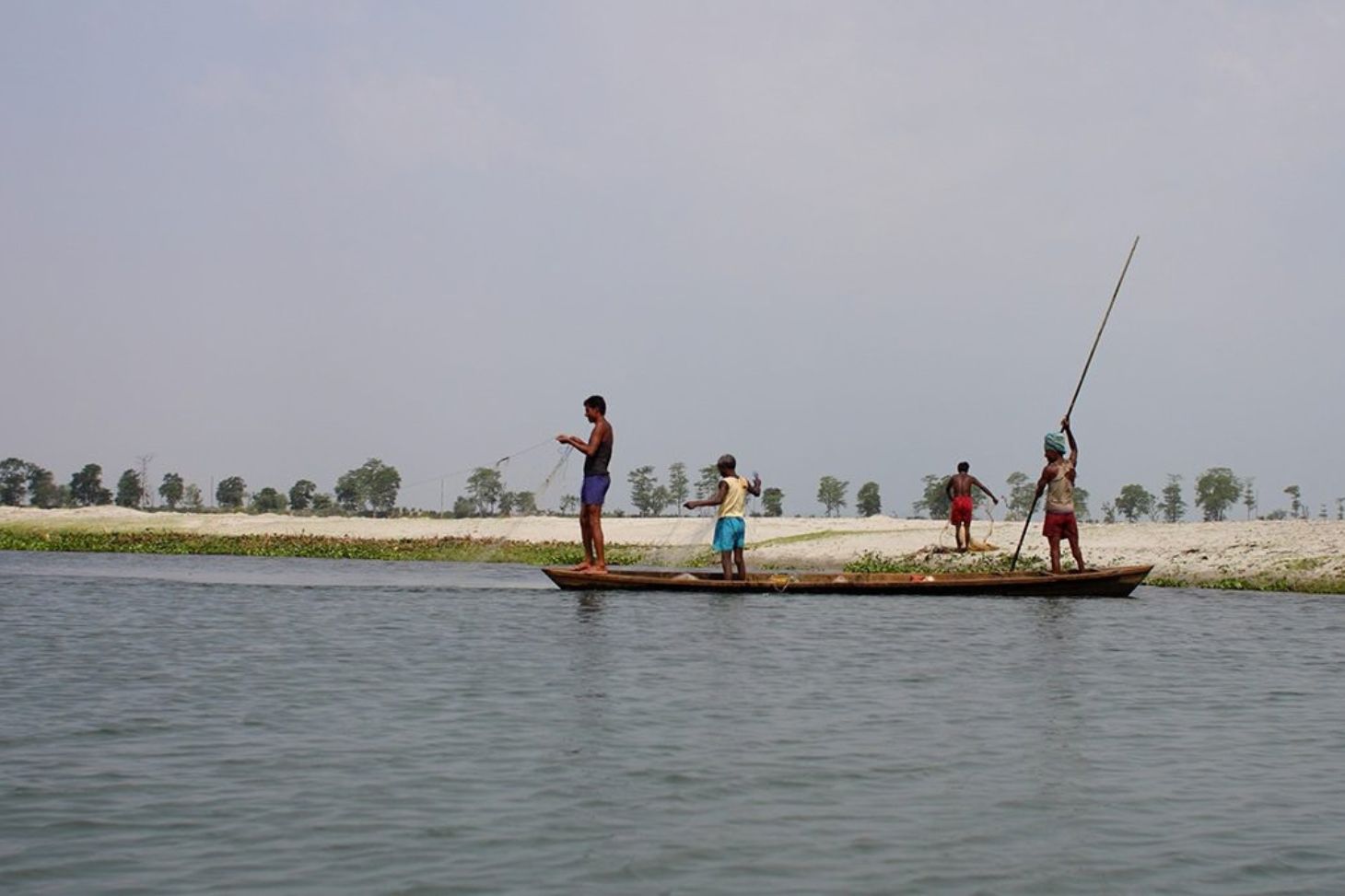
This seminar will be led by Kalpana Jha, a PhD candidate at the University of Victoria (British Columbia, Canada), at the invitation of Hanna Aicart, PhD candidate (ILCEA4 – GATES). The session is organized by ILCEA4’s “Migration, Borders and International Relations” research group.
In the borderlands between Nepal and India, belonging is lived in ways that exceed formal territorial limits: women traverse kinship ties across boundaries, and rivers carve new channels despite dams. Yet state infrastructures, from embankments to citizenship regimes, seek to discipline these flows, producing new exclusions while claiming to ensure order. Through kinship, bureaucratic erasures, and women’s everyday practices of sustaining ties across borders, I show how citizenship and dams operate as a masculinist infrastructure of containment, while women’s and rivers’ movements generate a rhizomatic tie of networks that refuse to be fixed. This tension between flow and control, reverence and erasure, sits at the heart of border governance at the India-Nepal border.
Kalpana Jha’s PhD thesis will be focused on studying Borders and bordering processes between Nepal and India. The study will explore the local cross-border networks that exists at individual and institutional level. Primarily this research will be engaging with the narratives around the changing nature of border and how local networks shape everyday bordering processes. Jha’s research seeks to trace what kind of networks exists but also how do these networks function in determining the nature of the openness of the border. Her research, embedded in the critical border studies that sees the border beyond a geographical line that divides territories but acts as a space of interaction, a bridge that brings together geographies, people and cultures.
Kalpana Jha is a PhD Candidate in Public Administration at the University of Victoria and a Fellow with the Borders in Globalization Lab. Her research explores what happens when international borders meet everyday life. Kalpana’s interest goes beyond how communities live within borders; she re-centers communities to understand how communities participate in making the border itself. Focusing on transboundary networks along the Nepal–India border, she examines how people, rivers, kinship, gender, and community relationships move across and sometimes challenge the territorial boundaries imposed by states. Her research interests include critical border studies and human mobility, feminist theory, environmental governance, and decolonial community-engaged research. She has over a decade of experience working on transboundary communities, social justice, inclusion, human rights, and community environmental governance across Nepal, India, and Canada.
Supported by the GATES project (Grenoble ATtractiveness and ExcellenceS), funded by the French government's Programme d'Investissement Avenir and implemented by ANR France 2030
Date
12:30 - 13:30
Localisation
Maison de la Création et de l'Innovation
339 avenue Centrale, St Martin d'Hères
Room 336 (Third Floor)
- Imprimer
- Partager
- Partager sur Facebook
- Partager sur LinkedIn