

Social Theory
- Imprimer
- Partager
- Partager sur Facebook
- Partager sur LinkedIn
GATES Fellowships
GATES Distinguished Fellow 2026
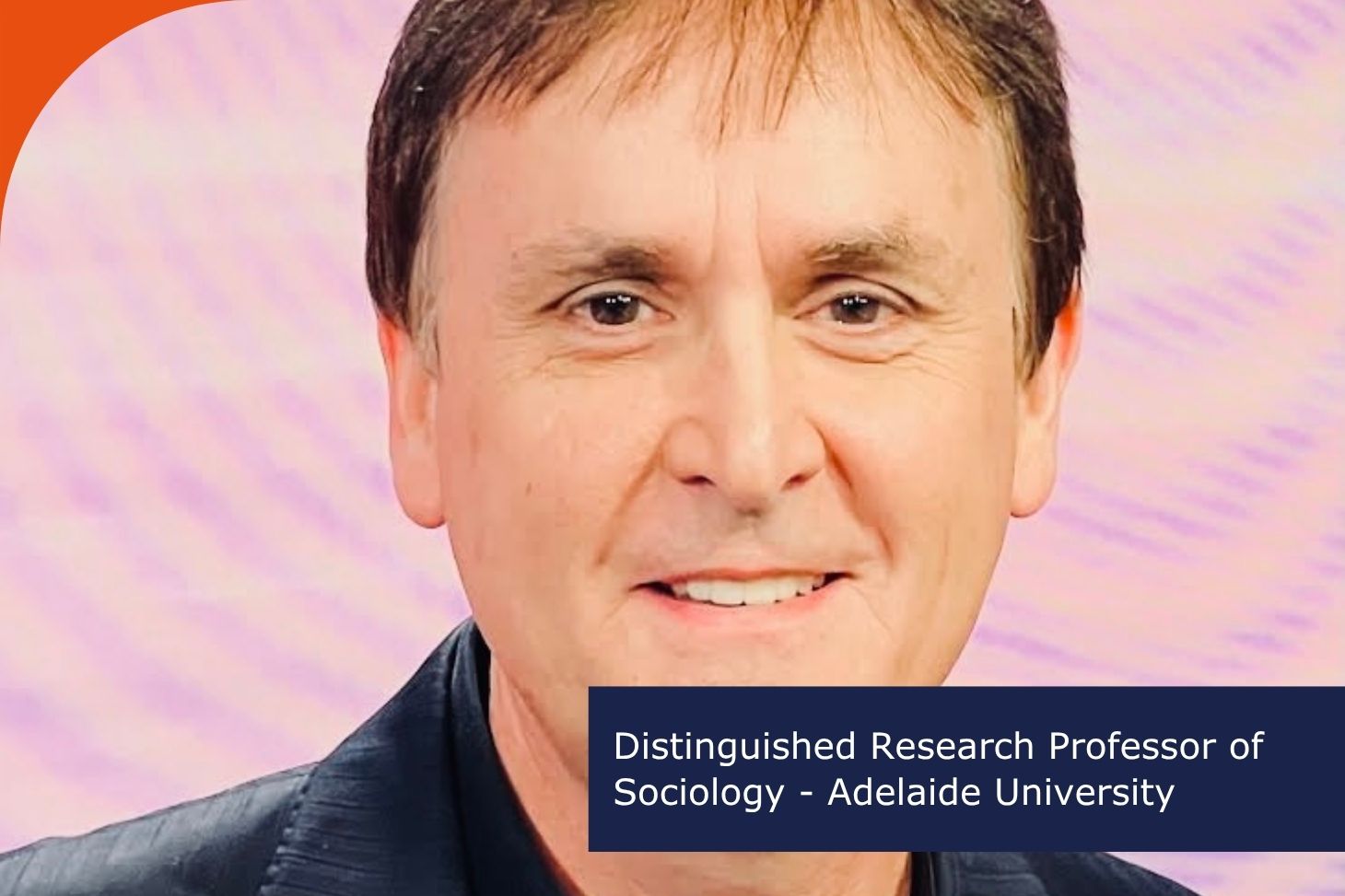
Anthony Elliott
Distinguished Professor Anthony Elliott AM holds the Bradley Distinguished Chair of Sociology at Adelaide University, where he is also Executive Director of the Jean Monnet Centre of Excellence for Digital Transformations. Professor Elliott is also currently Super-Global Visiting Professor at the Graduate School for Human Relations at Keio University, Japan and Full Visiting Professor of Sociology at University College Dublin, Ireland.
He works at the intersections of social theory, the social life of technology and identity studies. The author and editor of some 50 books with leading international presses and over 150 essays and articles in journals and anthologies, Professor Elliott’s research has had a significant and sustained global influence, helping to create new fields in the social science of artificial intelligence and psychosocial studies. Anthony Elliott’s work has been translated into over 17 languages.
In 2023 Elliott received the Member of the Order of Australia in the King’s Birthday Honours for significant service to education, social science policy and research, and in 2024 received the University of Melbourne Lifetime Achievement Award. He was elected Fellow of the Academy of Social Sciences in Australia in 2009, Fellow of the Academy of Social Sciences in the United Kingdom in 2020, and Fellow of the Royal Swedish Academy of Engineering Sciences in 2026.
Professor Elliott served as a member of the Expert Working Group of the Australian Council of Learned Academies (ACOLA) on Artificial Intelligence at the request of the Prime Minister’s Commonwealth Science Council. His latest books include Making Sense of AI (Polity, 2022), Algorithmic Intimacy (Polity, 2023) and Algorithms of Anxiety : Fear in the Digital Age (Polity, 2024).
Project at the MaCI
October-November 2026
The project, part of a broader programme of research Professor Elliott currently leads with his team in Australia along with scientific collaborators from Europe and Japan, aims to build a world-first, comprehensive approach to understanding predictive, communicative and decision-making algorithms that reshape intimacy and personal life.
This research as a MaCI Distinguished Research Fellow extends Professor Elliott’s theoretical work on predictive AI to explore its impact on human agency in the domains of companionship technology, automated therapeutics, and comparative technological cultures. By thinking in more sophisticated terms about digital isolation in the wake of algorithmic technology, the project will elaborate the idea of a ‘loneliness paradox’ through developing a multidisciplinary and multicultural.
approach to today’s challenges in intimate relationships. The ‘loneliness paradox’ refers to developments where people are more socially isolated, even as they appear more digitally connected than ever before. The new conceptual work carried out by Professor Elliott during his tenure at MaCI is organised around three themes:
1. Quantified Selves, Predictive Relationships: Conceptually situates predictive algorithms in the context of the automation of intimacy as a way of exploring wider problems of loneliness and digital isolation.
2. Automated Therapy and Lifestyle Change: Builds on work in science and technology studies exploring advancements in AI-based predictive mental health to establish a conceptual platform to advance the social science of automated therapeutics. This will contribute to improved understandings of the impact of predictive AI on self-reforming selves, self-help guidance, and the optimization of personalized mental healthcare.
3. Rethinking Algorithmic Intimacy in a World of Multiple Cultures: Will develop a framework with which to explore diverse cultures of intimacy by integrating evolving concepts of intimacy with a culturalist perspective on human-machine interaction sensitive to culturally unique genres of companionship algorithm use that have developed for different peoples and regions
Prof Elliott’s MaCI Fellowship offers invaluable opportunities for interaction with other researchers and projects that can enrich the development of the multidisciplinary and multicultural elements central to this project. The research at the Multidisciplinary Institute in Artificial Intelligence (MIAI), especially that which is being carried out by the team under the Ethics and AI chair, will be important here. Professor Elliott’s work has numerous affinities with the ‘What kind of society "is being promoted through AI"?’ scientific challenge, along with the ‘Authority and trust in algorithmic government’, ‘Artificial beings and human dignity’ and ‘Public and private freedom’ research topics.
The ‘real-world’ benefits from this Fellowship will come through its innovative contributions to research leading to an improved understandings of the cultural impacts of predictive AI upon digital isolation and the identification of new approaches to the repair of loneliness. To date policy discussions have tended to focus narrowly on issues like anxiety connected to social media, offering few comprehensive models to address the broader emotional impacts and complexities of digital isolation in human-machine interactions.
Activities
Supported by the GATES project (Grenoble ATtractiveness and ExcellenceS), funded by the French government's Programme d'Investissement Avenir and implemented by ANR France 2030

Websites
- Imprimer
- Partager
- Partager sur Facebook
- Partager sur LinkedIn